
For parents
Your child wants to prepare for the SAT. What happens now?
This page is written for you, not for the student. Ten minutes, and no English required.
Still have a question?
Leave your phone number — we will call back within 2 hours and answer it.
Apply nowFirst lesson free
Who this page is for
You pay, you decide, and usually nobody explains any of it to you. Centres talk to the student; you see the invoice.
This page tells you four things: what the SAT is, what it costs, what it cannot promise, and how to check any centre — including this one.
Ask us the questions in the last section. Ask for the answers in writing. If we refuse or deflect, that is an answer too.
What the SAT is — and is not
The SAT is an exam used in applications to US universities. It measures school knowledge: reading, the rules of writing, and mathematics. Scores run from 400 to 1600.
The SAT is not an English exam. That is the most common misunderstanding here. IELTS and TOEFL measure language; the SAT measures knowledge. Most universities ask for both, which means your child will need both.
The SAT is one part of an application. School grades, essays and recommendations count too.
No centre — including this one — can promise admission in exchange for preparation.
Anyone who promises it is selling something they do not control.
Money, honestly
The exam itself costs money, and it goes to College Board, not to us: $68 registration plus a $43 international fee — $111 in total, for every sitting.
The fee-waiver programme is written for low-income students in the United States and does not reach us. If anyone says they can get you a waiver, that is not true.
On top of that: IELTS or TOEFL, university application fees, the financial aid form, and visa fees. All of them need an international payment card.
Course prices and group start dates are on the course pages. The first lesson is free — you see a lesson before you pay for one.
For sons: the military service question
Almost every parent asks this, and we will not answer it as legal advice. We will only tell you what the public sources say.
The government advisory portal states that education deferment is granted to conscripts studying at institutions in Uzbekistan — secondary, specialised secondary, vocational, and full-time higher education. Foreign universities are not mentioned there. Not mentioned is not the same as prohibited.
Separately: students are typically called to the paid one-month mobilisation-reserve camp in July–August, which collides with application summer. Put it in the calendar early.
This is not legal advice. What is written above comes from public sources and is not presented as an official answer.
Get your answer in writing from your district military commissariat. Not from us, and not from any agent.
How to tell a real programme from a bad one
Ask any centre these questions — including us. Ask for the answers in writing.
- Which legal entity takes the money? Show the tax number and the contract.
- Who teaches? Their name, and their own score or track record.
- How many students per group? How long is a lesson, and how often?
- May I sit in on one real lesson?
- Where are last year’s results, and what document backs them?
- What are the refund terms, and which clause of the contract states them?
- Are you promising admission, or a visa?
“Yes” to the last one is a stop sign. Neither a centre nor an agent controls an admissions decision or a visa decision.
Cash payments, no written contract, and “discount if you pay today” are the same sign.
What you can actually do at home
A parent’s job is not to teach the SAT. It is to build the conditions and lower the pressure.
- Build the weekly schedule together, then respect it — no chores during study blocks.
- Protect sleep. A tired teenager writes badly.
- Provide a computer and stable internet — the exam is digital now.
- After each practice test ask “what was hard?”, not “what did you score?”.
- Do not compare your child to the neighbour’s.
- Do not treat one bad practice score as a catastrophe.
- Do not build the university list for them.
And talk about money openly at home. Your child needs to know what you can carry.
It is what saves them from the worst version of this — finding out on the day the offer arrives.
Don’t trust us — check independently
Take nothing on this page on our word. Every part of it can be checked somewhere:
- Test dates, fees and rules — collegeboard.org.
- University requirements and financial aid — that university’s own site.
- The military service question — your district military commissariat, in writing.
- Legislation — lex.uz.
- Consumer complaints — consumer.gov.uz. That applies to us too.
For parents: a 20-minute conversation
If you still have questions after this page, we will sit down and talk. Twenty minutes, in Uzbek, with nothing being sold.
Your child does not need to be there. Afterwards we give you a one-page written summary, so you can compare us against other centres. And if you want it, you sit in on one real lesson.
Still have a question?
Leave your phone number — we will call back within 2 hours and answer it.
Apply nowFirst lesson free
First step
Find out where you actually stand
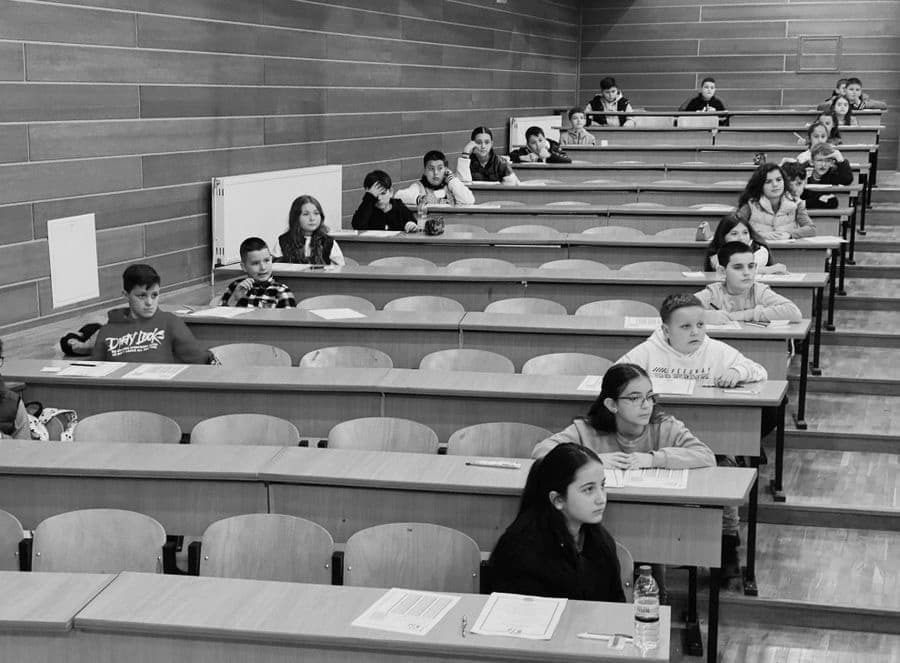
Professional Diagnostics is not a course — it is a single sitting. You take a test under real exam conditions and get a written read-out by section: which topics are solid, which one is holding your score down. Only then is it clear which group you belong in.
- Free, online, and no obligation
- Under real exam conditions
- A report broken down by section and topic
- A teacher's commentary and a recommended programme
First lesson free
Application
Take the first step
Leave your details — we will get in touch, assess your level and tell you which programme fits.
- Phone
- +998 55 588 99 39
- Opening hours
- Monday – Saturday, 10:00 – 20:00
Leave your name and phone number